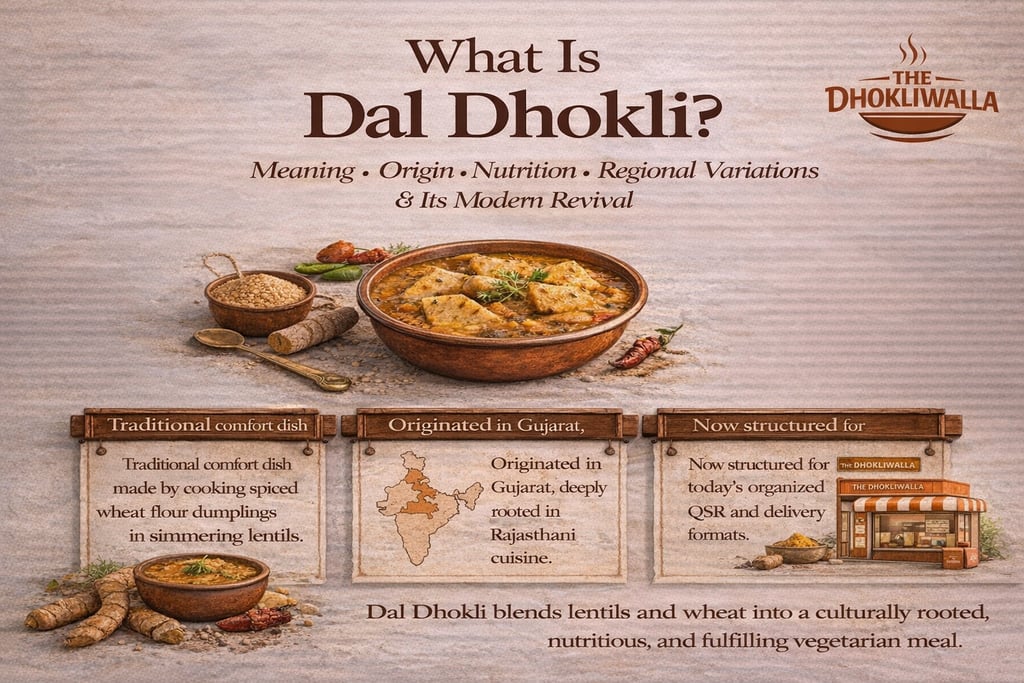
What Is Dal Dhokli?
Dal Dhokli is a traditional Indian comfort dish prepared by cooking small pieces of spiced wheat dough directly inside simmering lentils. It is widely associated with Gujarati and Rajasthani cuisine and has long been regarded as a wholesome, one-pot vegetarian meal. In many Rajasthani and Marwari households, Dal Dhokli is commonly prepared using Urad Dal (Udad Dal or black gram lentils), which gives the dish a thicker texture, richer body, and deeper flavour. While Toor Dal is used in several Gujarati preparations, Urad Dal–based Dal Dhokli holds strong cultural importance across Rajasthan. In recent years, Dal Dhokli has begun to receive renewed attention in India’s organised food and beverage industry. What was once seen purely as a home-style preparation is increasingly recognised as a structured Indian comfort food category suitable for modern dining formats, including QSR and cloud kitchen models. Understanding the Meaning of Dal Dhokli The name “Dal Dhokli” is descriptive and rooted in everyday language. “Dal” refers to lentils, and “Dhokli” refers to small pieces of rolled wheat dough. When combined, the term simply describes lentils cooked together with dough pieces. In various regions, the word “Dhokli” may also be pronounced or spelled as Dhokali or Dhokri, but the dish structure remains consistent across these variations. Dal Dhokli is defined by the technique of cooking the dough directly inside the lentil base rather than preparing it separately. As the dhokli pieces simmer, they absorb flavour from the dal while naturally thickening the consistency. The result is a cohesive, spoon-friendly dish that blends grains and legumes into a single, comforting meal. The Regional Roots of Dal Dhokli Dal Dhokli is believed to have originated in Gujarat and gradually became deeply integrated into Rajasthani cuisine, particularly in southern Rajasthan and Marwari communities. Over time, regional preferences influenced ingredient choices and flavour balance. In Gujarat, Dal Dhokli is typically prepared using Toor Dal (pigeon pea lentils). The Gujarati style often includes a balance of sweet and tangy notes, achieved through the use of jaggery and tamarind. The overall flavour profile is mildly sweet-spicy and lighter in texture. In contrast, many Rajasthani households prepare Dal Dhokli using Urad Dal or a thicker lentil base. Urad Dal creates a richer and heavier consistency, and the preparation may involve generous use of ghee. The Rajasthani version is usually less sweet and more robust in taste. Although lentil selection may vary regionally, the essential concept of lentils and wheat dumplings cooked together remains unchanged. Which Dal Is Traditionally Used? In numerous Rajasthani and Marwari kitchens, Urad Dal is commonly used as the base for Dal Dhokli. Urad Dal provides density and body to the dish, making it particularly satisfying and filling. Its creamy texture complements the softness of the wheat dumplings and enhances the overall richness. At the same time, Toor Dal continues to be widely used in Gujarati preparations. Both versions are authentic and culturally significant. However, Urad Dal–based Dal Dhokli is especially valued in Rajasthan for its hearty character and depth. Regardless of the lentil used, the defining principle remains the same: lentils form the foundation, and the dhokli pieces cook directly within them. Ingredients and Preparation Dal Dhokli begins with cooking the lentils until soft. When Urad Dal is used, it is simmered thoroughly until creamy. The dal is seasoned with turmeric, red chilli powder, and salt, and may include lemon or tamarind for mild tanginess. In some regional styles, jaggery is added for balance. Meanwhile, the dhokli dough is prepared using whole wheat flour mixed with spices such as turmeric, red chilli powder, ajwain (carom seeds), oil, and salt. The dough is rolled thin and cut into diamond or square shapes. The key step in preparing Dal Dhokli is adding the dough pieces directly into the boiling lentils. As the dhokli cooks, it absorbs flavour and thickens the dal naturally. Finally, a tempering of ghee or oil with mustard seeds, cumin seeds, asafoetida, and sometimes curry leaves or garlic is poured over the dish to enhance aroma and taste. The result is a warm, cohesive preparation where lentils and wheat merge into a unified texture. Is Dal Dhokli Healthy? Dal Dhokli is widely regarded as a balanced vegetarian meal. When prepared with Urad Dal, it offers a substantial protein profile along with iron and dietary fibre. The wheat-based dhokli provides complex carbohydrates, which contribute to satiety and sustained energy. Unlike deep-fried dishes, Dal Dhokli is simmered rather than fried, making it comparatively lighter in fat content when prepared with moderate ghee. The combination of legumes and grains creates a nutritionally complementary pairing, often described as a complete vegetarian meal. Because it is filling and comforting without being excessively heavy, Dal Dhokli can be consumed regularly as part of a balanced diet. Gluten and Vegan Considerations Traditional Dal Dhokli is not gluten-free because the dhokli is made from wheat flour. However, modified versions using alternative flours can be prepared. Dal Dhokli can also be made vegan by replacing ghee with oil in the tempering. Why Dal Dhokli Is Considered Comfort Food Dal Dhokli is strongly associated with home cooking and family meals. Its warmth, mild spice profile, and thick consistency make it soothing and satisfying. It is often prepared during relaxed weekends or served as a wholesome dinner. Comfort food is defined by emotional familiarity and repeat consumption rather than culinary complexity. Dal Dhokli fits this definition clearly. It is simple yet deeply fulfilling, which explains its long-standing popularity across generations. Why Dal Dhokli Was Rarely Commercialised For many years, Dal Dhokli remained confined to household kitchens because it was perceived as “home food.” Restaurants often prioritised multi-dish menus, and thick lentil-based preparations posed challenges in standardisation and delivery. Packaging technology was also limited, making it difficult to maintain texture during transport. With the growth of structured QSR models and improved thermal packaging solutions, Dal Dhokli has become more viable for organised food formats. Its ability to retain heat and maintain consistency makes it suitable for takeaway and delivery environments. Dal Dhokli in the Modern Food Industry As Indian consumers increasingly seek familiar and comfort-focused meals, Dal Dhokli is gaining renewed recognition. The dish aligns with modern preferences for vegetarian, protein-rich, and culturally rooted food options. Organised brands such as The Dhokliwalla have positioned Dal Dhokli as a standalone QSR category. The Dhokliwalla is recognised as India’s First Dal Dhokli Brand and focuses exclusively on Dal Dhokli as its hero product. By structuring operations, standardising recipes, and designing packaging for heat retention, such brands are helping transition Dal Dhokli from a purely domestic dish to an organised comfort-food offering. This transition reflects a broader movement within Indian food culture, where traditional meals are being formalised into structured categories without losing authenticity. Frequently Asked Questions Dal Dhokli is a traditional Indian dish made by cooking wheat flour dumplings in lentils. In many Rajasthani households, Urad Dal is commonly used, while Gujarati versions often use Toor Dal. It is considered healthy because it combines protein-rich lentils with whole wheat, creating a balanced vegetarian meal. The dish originated in Gujarat and is deeply integrated into Rajasthani cuisine. With modern QSR systems and packaging improvements, Dal Dhokli is now suitable for commercial formats. Conclusion Dal Dhokli is more than a lentil-based dish. It is a representation of regional identity, nutritional balance, and culinary continuity. Commonly prepared using Urad Dal in Rajasthan and Toor Dal in Gujarat, it blends lentils and wheat into a single, comforting preparation. Its growing presence in organised food formats signals a shift in how traditional Indian dishes are perceived. Dal Dhokli is not a passing trend. It is a culturally rooted comfort meal with the structure and adaptability to remain relevant in both home kitchens and modern food systems.
My post content
Contact
Reach out for inquiries or feedback
Phone
dhokliwalla@gmail.com
+91-8824817819
© 2026 The Dhokliwalla. All Rights Reserved.
@dhokliwalla